One of the most critical applications of ethology in veterinary practice is the identification of pain and early disease. Prey species (e.g., horses, rabbits, guinea pigs) are evolutionarily programmed to hide signs of weakness, making pain assessment challenging.
Clinical ethology—the study of animal behavior in a veterinary context—has shifted from a niche interest to a core component of general practice. This change is driven by the understanding that a "healthy" animal is not merely one free of disease, but one that is mentally stimulated and emotionally stable.
: Studies have recently detected PFAS (per- and polyfluoroalkyl substances) in dolphin milk, signaling significant environmental health concerns for marine life.
Veterinary science is no longer just about vaccines and surgery—it’s about decoding behavior as a vital sign. By listening to what animals are showing us, we can diagnose earlier, treat more compassionately, and strengthen the human-animal bond.
Recent research in comparative veterinary medicine highlights the gut-brain axis. An animal exhibiting anxiety, aggression, or obsessive licking may actually have subclinical gastroenteritis, dysbiosis (imbalanced gut flora), or food intolerance. Conversely, chronic stress changes gut permeability. flags the problem; veterinary science finds the source in the intestines.
The intersection of animal behavior and veterinary science highlights the importance of interdisciplinary collaboration. By working together, researchers, veterinarians, and animal care professionals can:

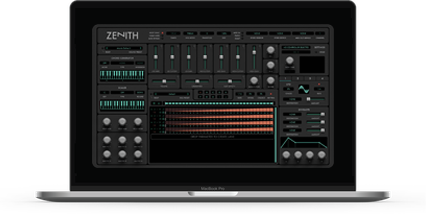
As a feature-rich MIDI processor with a host of filters, chorder, scaler, LFOs, envelopes, and 24 x 32 step sequencers controlling MIDI CCs, pitch, velocity and gate at a variety of rates - with complex tools and presets for modifying lanes. Or as a handy custom interface for simply controlling MIDI and SysEx receiving gear.
Zenith features 200+ presets, with pre-configured maps for over 100 devices and is AU / VST2 compatible for PC/Mac.
