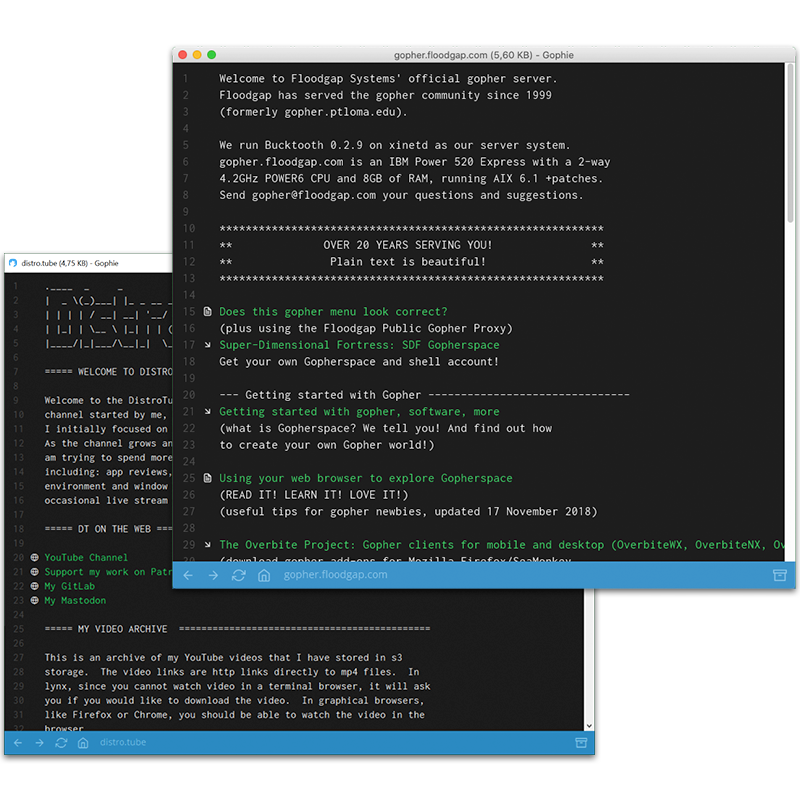
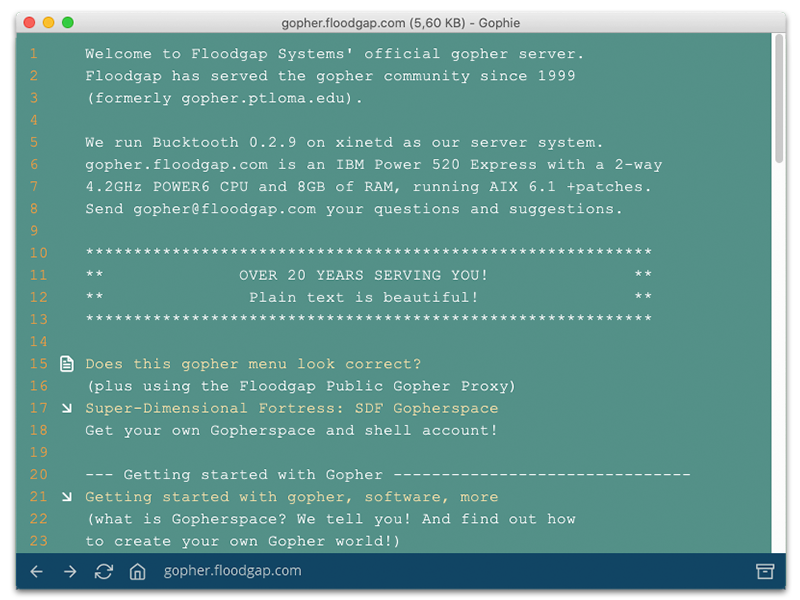
Full 100% Gopher protocol (RFC 1436) support
Gophie supports all Gopher protocol items from the gophermenu including any images, search functionality,
binary file downloads, telnet sessions and many more. Gophie launches your favourite media player for media
files, so you can enjoy them best. Telnet sessions are also launched through your operating system with the
telnet application of your choice.
Learn more about the protocol support
Gophie is Open Source under the GNU GPLv3 License
You can use Gophie under the terms of the GNU General Public License v3.0 which not just allows
you to use Gophie free of charge in any way you like, but also allows you to use Gophie’s source
code, make changes or contribute to Gophie.
Fully customisable user interface
Pick the colours and fonts you like to adjust Gophie’s appearance to your taste and system styles.
Gophie is written in plain Java for anyone and any system
The use of standard Java does not just give Gophie maximum flexibility and compatibility with
any operating system or Java compiler out there, including older versions, but also allows more
developers understand Gophie’s code.
Ilovecphfjziywno Onion 005 Jpg !!top!! 【100% GENUINE】
This looks like a or an obfuscated phrase. The most plausible interpretation is a simple substitution cipher (e.g., Caesar cipher or Atbash).
It appears to be either:
: Browsing unverified .onion domains can expose you to security risks if you are not using a properly configured environment like Tor . Ilovecphfjziywno Onion 005 jpg
To understand the keyword, we have to break it down into its likely components. In the world of cybersecurity and deep-web navigation, strings like "cphfjziywno" are rarely random. They are often or v3 onion addresses . This looks like a or an obfuscated phrase
Many "Creepypastas" or ARG (Alternate Reality Games) use cryptic filenames to hide clues. Users search for these strings to find the next piece of the puzzle. To understand the keyword, we have to break
: Files with these naming conventions are frequently used in Alternate Reality Games (ARGs) or internet "rabbit holes" designed to pique curiosity through ambiguity.